

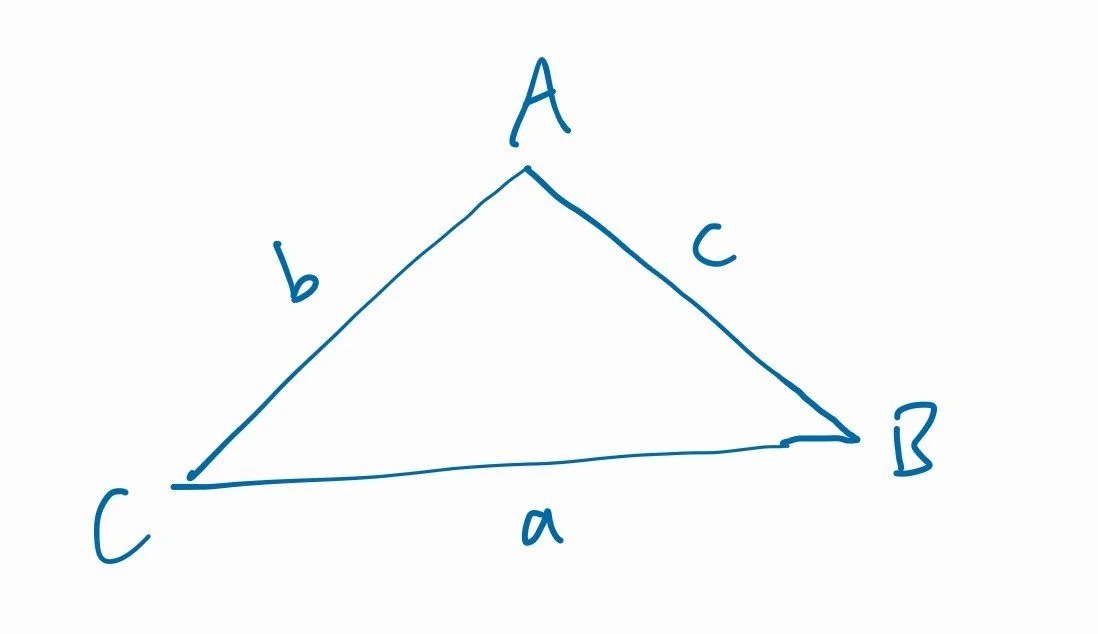
So, firstly, make sure you label your triangle correctly! Angle A is opposite side a and so on:
When can you use Sine rule?
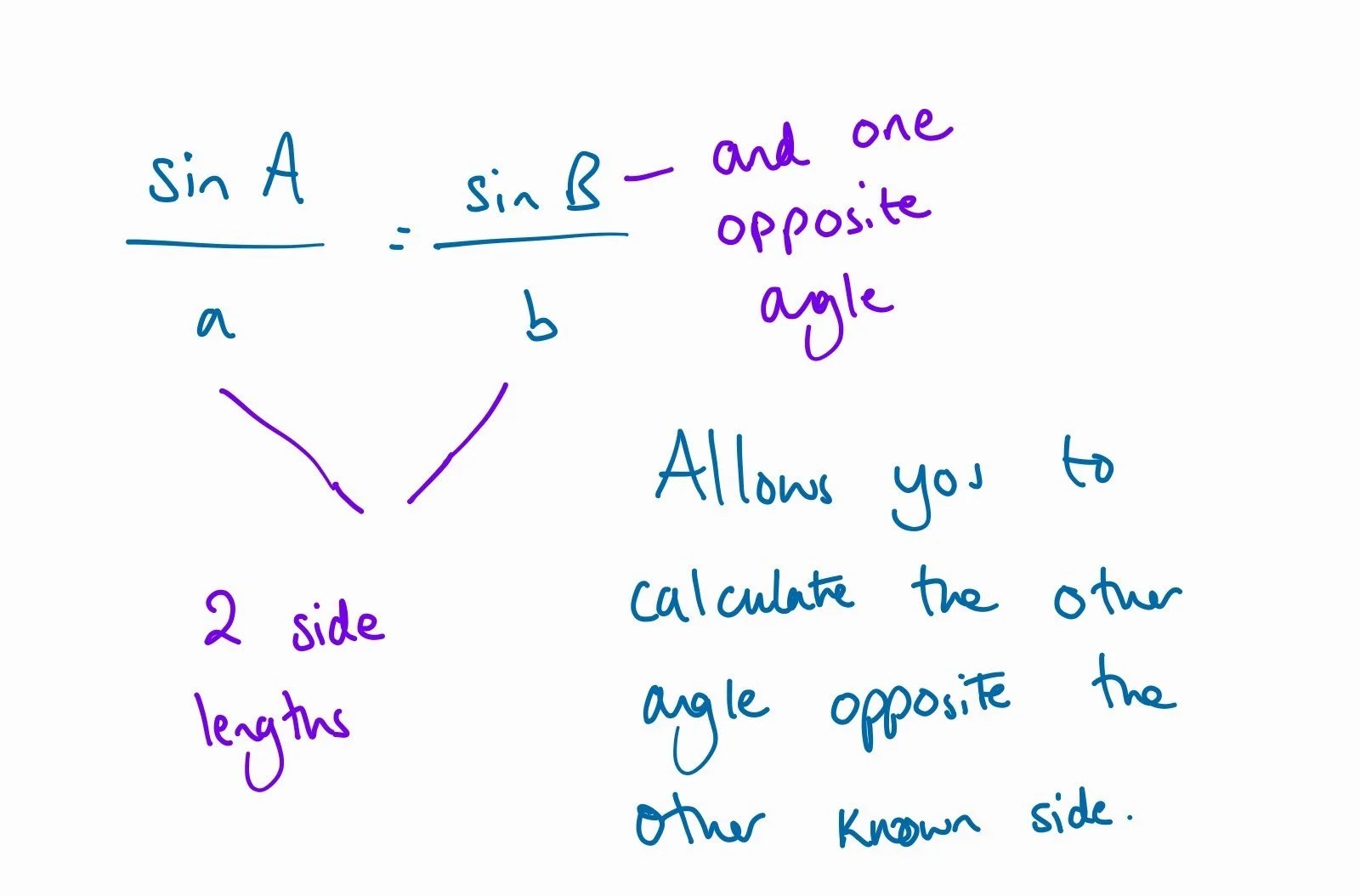
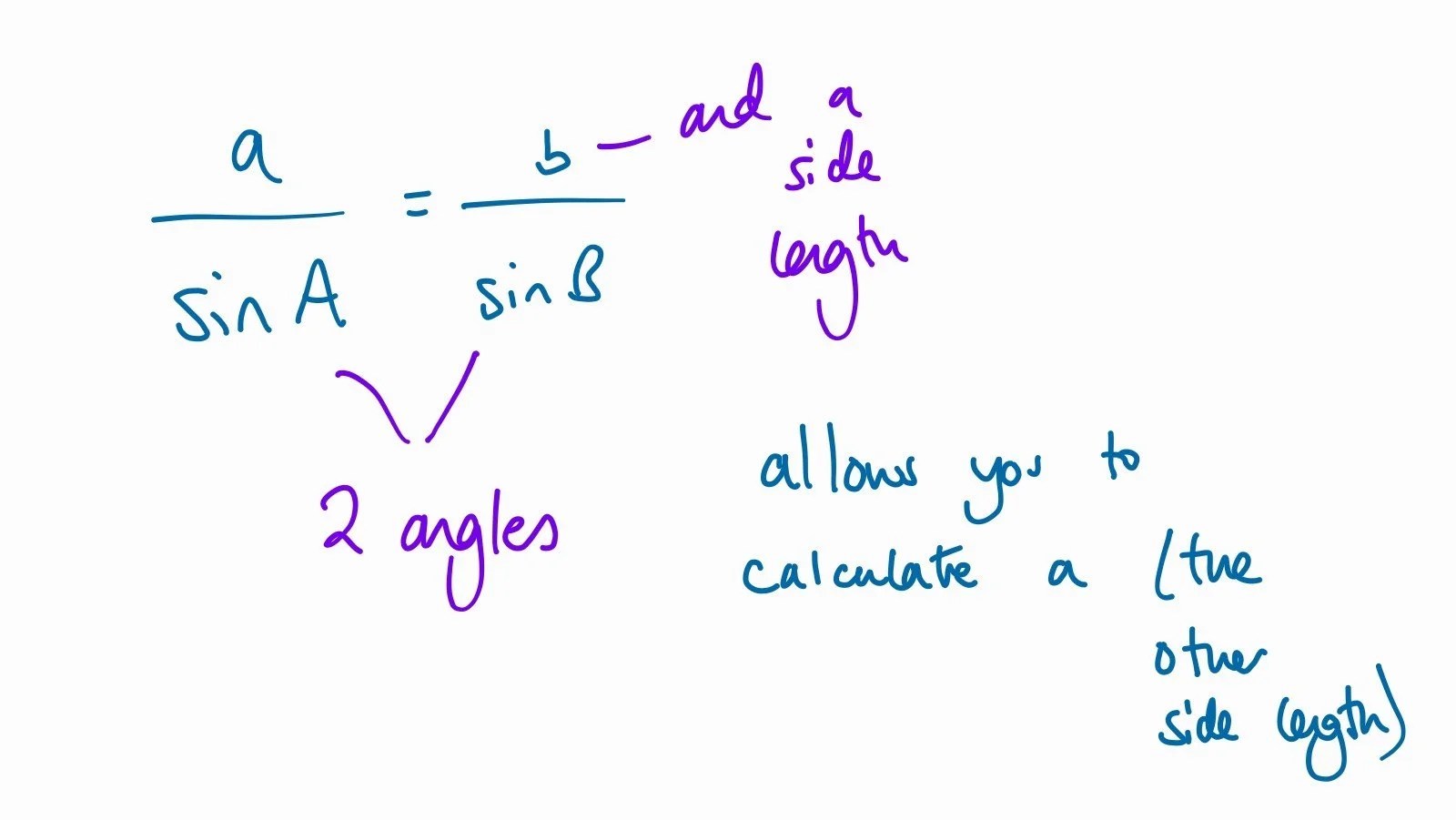
If you look at the fractions for Sine rule, you will only need 2 of the fractions the a/sin A and b/sin B.
There are 4 unknowns in those 2 fractions.
2 angles and 2 side lengths that are opposite.
You can only solve an equation where one thing is unknown.
This means if you have a question that requires sine rule, the question has to give you the following information:
2 side lengths and an angle that is opposite one of those sides
Or
2 angles and a side length that is opposite one of those angles.
It won’t work if you have 2 side lengths and the angle in between them – that’s cosine rule.
It won’t work if you only have 3 side lengths – again that is cosine rule.
More questions and explanations coming soon!